
Uriah, David’s Most Gallant Soldier (Pt. 2)
The Cover-up:
In the second part of this series, we will explore what David did to cover up his sins and then later the price he paid for it. One bad decision by David on an ordinary day ended up ruining lives and disrupting the plans of God for the kingdom of Israel. It is amazing how one act of pleasing the flesh could have such a domino effect throughout human history.
“Go down to your house and wash your feet.” David’s instruction to Uriah sounded like a harmless one, but actually it meant, “go to your house, and sleep with your wife to cover up my sins.” Because of his lack of devotion to God and his duties, David made an irresponsible mistake. At the time when kings went to war, David refused to go; instead, he whiled away time in the comforts of his palace. Interestingly, refusing to go to war on the battlefield is an inadvertent refusal to go to war anywhere else. Hence, David didn’t stand a chance at winning the battle against the temptation he faced because he had refused to put on battle armour of any kind.
David honestly hoped to cover up his sins by making another man take responsibility for his actions. This seems to be a character flaw in David that is visible in how he even let Joab go out there to fight at the time when kings went out to fight. Joab was no king; David was. And the sin David committed would not have happened if he had taken his responsibilities as a king seriously instead of delegating them to someone else. This is another classic case of the comfort of kingship leading a mighty king to shirk his responsibilities and rather delegate them to one of his subjects. It always breeds problems.
Uriah did not go down to his house even after being instructed by the king of Israel to do so. This defiance, even in the face of authority, is the first signal that Uriah was determined to do what he did. He had every right to go home and sleep with his wife after being away for so long. That’s an opportunity any married man would jump at. Additionally, the King of Israel was the one who instructed him to do so. Even after these 2 pressurizing factors, he still didn’t go home. He rather slept at the door of the King’s house with the other servants of the king. When David found out, he quizzed Uriah about it, and Uriah gave a very profound reply. He said to David that the ark and armies of Judah and Israel dwell in booths on the battlefield; hence it wouldn’t make sense to go down to his house, eat, drink, and sleep with his wife. This is the reason he chose to act the way he did. Indeed, this is what anybody would expect of a gallant soldier when there is war. To be so focused that even if they are presented with legitimate pleasures, they would refuse them. Unfortunately, in this case we can’t say this about the mighty King David.
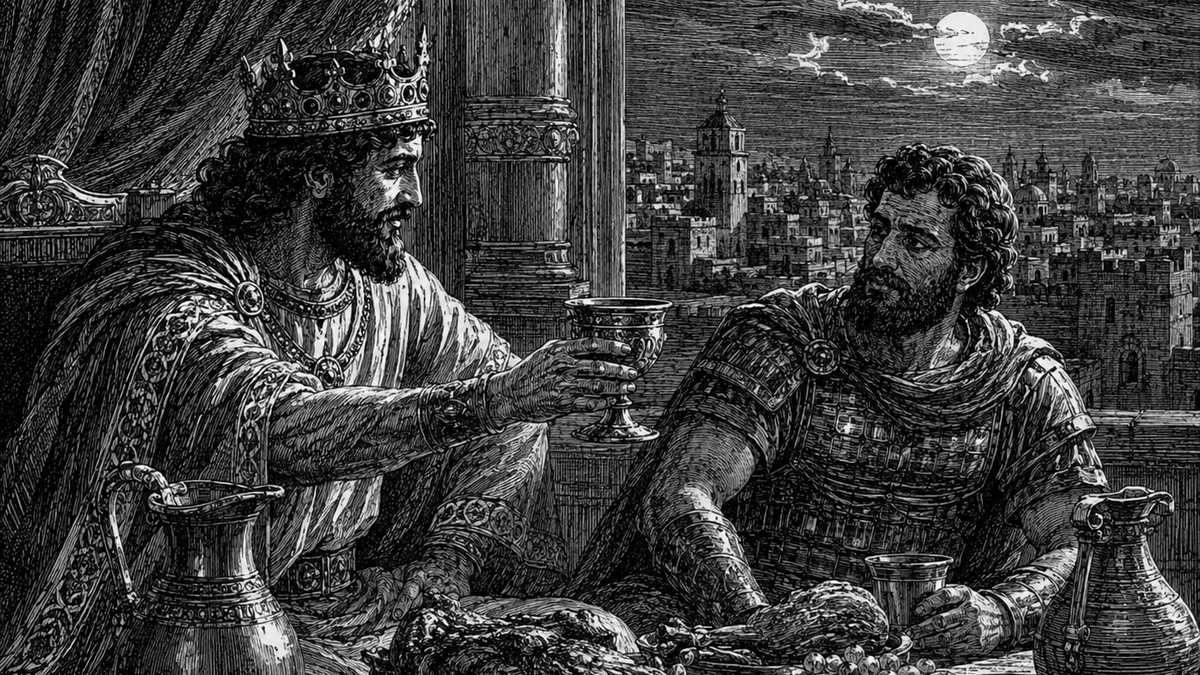
From my perspective, since David noticed Uriah’s wisdom and sense of duty, he hatched a plan to get him into a state of mind where he had very little control over his faculties: drunkenness. So David invited Uriah and offered him food and drinks at his table. Even after consuming this, and in a state of drunkenness, Uriah didn’t go home to sleep with his wife. Rather, he slept again amongst the servants of the king. This points to the fact that we need to be so dedicated to God and the tasks he has put in our hands to the extent that, no matter the state of mind we are in, whether intoxicated by any substance or situation, we will still not shirk our devotion to God and dedication to the work he has placed in our hands. How many people have been overwhelmed by lust in one day and committed a sin that impacted many lives for decades? It is for this reason that I call Uriah a gallant soldier; that even under intoxication, he still had the presence of mind to sleep amongst the servants of the King rather than go home to the warm bosom of his beautiful wife. This also reminds me of when our LORD Jesus Christ was tempted by Satan. He too was in a somewhat vulnerable state. He was hungry due to the fast, and the devil’s temptation to him included turning stones to bread. But guess what, in that state of hunger and the pressure that can put on an individual, Jesus refused to yield to the temptation. No matter how overwhelming the hunger was, Jesus decided to rather stay devoted to God than give room to any form of relief that was actually a destructive plot from Satan.
Uriah refused to enjoy legitimate pleasure because he was devoted to God and his godly duties.
David hatched another plan: he sent Uriah’s death sentence by his own hand to Joab at the warfront. This eventually led to the death of Uriah because the king instructed Joab to put Uriah “… in the forefront of the hardest fighting, then draw back from him that he may be struck down and die”. Joab followed through with the instruction, and this led to the death of Uriah. Also, the fact that Joab didn’t question this instruction points to the fact that the word of the King is always obeyed without room for sluggishness or defiance. This makes Uriah’s defiance of David’s instructions even more meaningful to the subject of his devotion to God. Uriah wouldn’t have died the way he did if he had just gone down to his house as the king instructed. He didn’t deserve to die either, merely because of his devotion to God and his country. Uriah defied the King of Israel because of his devotion to the KING OF KINGS, and it cost him his life; it cost his wife her dignity and a child. David planned and plotted for the death of Uriah like he was an enemy. What was his crime? He shirked legitimate pleasures just so he could be fully focused on fighting for his God and his king – the very king who plotted to kill him. Uriah’s nobility was displayed in his defiance of the King’s authority. But it was very costly because he died for it.
Here, I will proceed to discuss the idea of closeness to enemy walls and how David explored it in the plot to kill Uriah. From what I gather from the text (2 Samuel 11:18-21), it appears that it was common knowledge to fight your enemy far away from their city and city walls. This distance from the walls keeps the attacking army away from the arrows flying from enemy archers shooting from their city wall. This is pretty commonsensical – the distance away from your enemy’s habitation can be a sure battle strategy that can ensure victory. Yet, it seems Joab carried out David’s plot to kill Uriah by instructing him to go close to the city wall. Closeness to enemy walls is exactly what faux-harmless worldliness looks like. Faux-harmless worldliness refers to worldly pleasures that don’t appear harmful to the average Christian. You know, the kind of activities that some Christians can even defend with Scripture. These look spiritually harmless at face value, but at best, they bring you closer and closer to the enemy’s walls. At worst, they will pierce your heart directly and immediately with so much sorrow and agony that you lose your taste for the things of God and start doubting him. If David had applied this same strategy in his personal life, he wouldn’t have committed that grievous sin that cost him so much, and it wouldn’t have had lasting consequences for generations after him. The city walls of Satan are fleshly desires – the closer you get to them and feel comfortable around them, the easier it is for his fiery darts to pierce through your heart. An unbroken sense of devotion and duty to God is one sure way to remain far from the city walls of Satan. For Jesus himself was always about his Father’s business and didn’t have time for mundane activities (Luke 2:49). He was purposeful and intentional. He didn’t give room to anything that would take him away from his devotion to God and his mission.
The lessons from David’s most gallant soldier are enormous. They touch on preserving our relationship with God by maintaining high focus, dedication, and devotion to Him and the work he has put in our hands. Uriah’s kind of mental strength and self-awareness, even when forced to go and partake of legitimate pleasures while drunk, is unmatched. He demonstrated that when a person is consumed by devotion to their God and godly duties, nothing can derail them. It had to take death to shake Uriah off his stance. I am a firm believer of the saying that “How you do anything is how you do everything”. This applies to both David and Uriah. How David treated the battle with the Kings is the same way he treated the battle with sin. He didn’t show up to fight when it was time for the kings to fight; neither did he show up to fight against sin. He delegated the fight with the Kings to Joab, and regarding his fight with sin, he fell into sin and desired to delegate Uriah to cover up his mess for him. Uriah wouldn’t do it, so guess what? He orchestrated his death. In the end, both Uriah and David fell at the hands of their enemies; Uriah died defending his country in devotion to God, but David fell on the battlefield that mattered the most. Christian Rapper KB put it this way, “David never danced again; he limped all the way to the end”.


Comments